
Sunday, October 9, 2011
pet
A pet is a household animal kept for companionship and a person's enjoyment, as opposed to wild animals or to livestock, laboratory animals, working animals or sport animals, which are kept for economic or productive reasons. The most popular pets are noted for their loyal or playful characteristics, for their attractive appearance, or for their song. Pets also generally seem to provide their owners with non-trivial health benefits; keeping pets has been shown to help relieve stress to those who like having animals around. There is now a medically-approved class of "therapy animals," mostly dogs, that are brought to visit confined humans. Walking a dog can provide both the owner and the dog with exercise, fresh air, and social interaction. The most popular pets are dogs and cats, but there are also rodent pets, such as gerbils, hamsters, chinchillas, fancy rats, and guinea pigs, and avian pets, such as canaries, parakeets, or parrots.

nature
Nature, in the broadest sense, is equivalent to the natural world, physical world, or material world. "Nature" refers to the phenomena of the physical world, and also to life in general. It ranges in scale from the subatomic to the cosmic.

human body
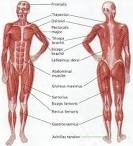
The human body is the entire structure of a human organism, and consists of a head, neck, torso, two arms and two legs. By the time the human reaches adulthood, the body consists of close to 100 trillion cells, the basic unit of life. These cells are organised biologically to eventually form the whole body.
exercise
Physical exercise is any bodily activity that enhances or maintains physical fitness and overall health and wellness. It is performed for various reasons including strengthening muscles and the cardiovascular system, honing athletic skills, weight loss or maintenance, as well as for the purpose of enjoyment. Frequent and regular physical exercise boosts the immune system, and helps prevent the "diseases of affluence" such as heart disease, cardiovascular disease, Type 2 diabetes and obesity.

Food
Food is any substance consumed to provide nutritional support for the body. It is usually of plant or animal origin, and contains essential nutrients, such as carbohydrates, fats, proteins, vitamins, or minerals. The substance is ingested by an organism and assimilated by the organism's cells in an effort to produce energy, maintain life, and/or stimulate growth.

continent
A continent is one of several very large landmasses on Earth. They are generally identified by convention rather than any strict criteria, with seven regions commonly regarded as continents—they are (from largest in size to smallest): Asia, Africa, North America, South America, Antarctica, Europe, and Australia.

slave
Slavery is a system under which people are treated as property and are forced to work.Slaves can be held against their will from the time of their capture, purchase or birth, and deprived of the right to leave, to refuse to work, or to demand compensation. Conditions that can be considered slavery include deb bondage, indentured servitude, serfdom, domestic servants kept in captivity, adoption in which children are effectively forced to work as slaves, child soldiers, and forced marriage.


Subscribe to:
Posts (Atom)